






NEXGA S1 – The Most Accurate Chinese Power Meter?
Joe Whittingham2026-06-09T11:17:32+00:00About the NEXGA S1
When I talk about Chinese bike parts, I usually have two levels of things that I recommend. Firstly, there’s “Good for the price.”, where the product may not be the best performing on the market (compared with its Western counterparts) but the price is significantly cheaper justifying its recommendation. The second is just “Good” full-stop. Where the product irrespective of price can go toe-to-toe with its Western competitors.
For the longest time, Chinese spider power meters have been “Good for the price.” While not bad, they’ve traditionally had a few quirks such as under-reading or over-reading by a few percent. Or having issues with power drift after heavy sprints. Sometimes they nail everything but then don’t come in the standard everyone wants (Easton Cinch!) But finally, it seems we have a spider based power meter that is good. Its name is NEXGA.
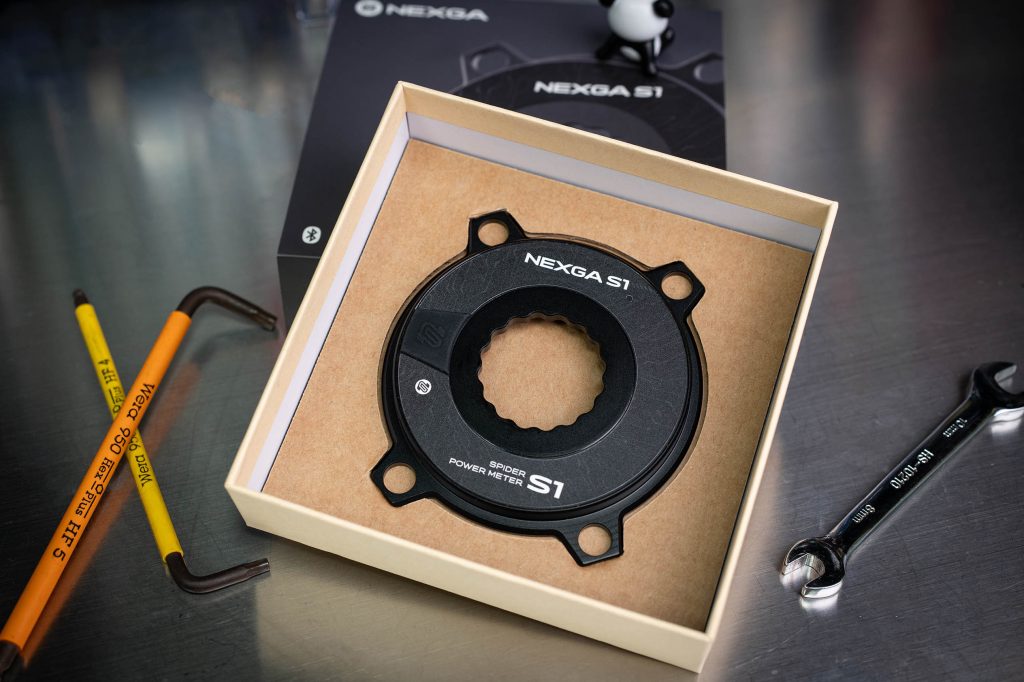
This didn’t just happen though. We first saw NEXGA publicly at the Shanghai bike show in 2025, but we’ve been working with them behind closed doors since before then. For the past year we’ve been testing, tweaking, iterating and re-designing to get to the product we have today, the S1.
Headline Features:
- ±1% Accuracy – Claimed… we’ll see if that’s true or not.
- Lightweight – Only 95g, minimizing bike load.
- Type-C Charging – Fast, modern USB-C compatibility.
- IPX7 Waterproof – Fully protected against rain and sweat.
- Dual Connectivity – ANT+ & Bluetooth for seamless head unit pairing.
- 2-Year Warranty – Industry-leading support for long-term reliability.
- Compatible with CYBREI / OVERFAST / INCOLOR Cranks
Let’s just jump into the data:
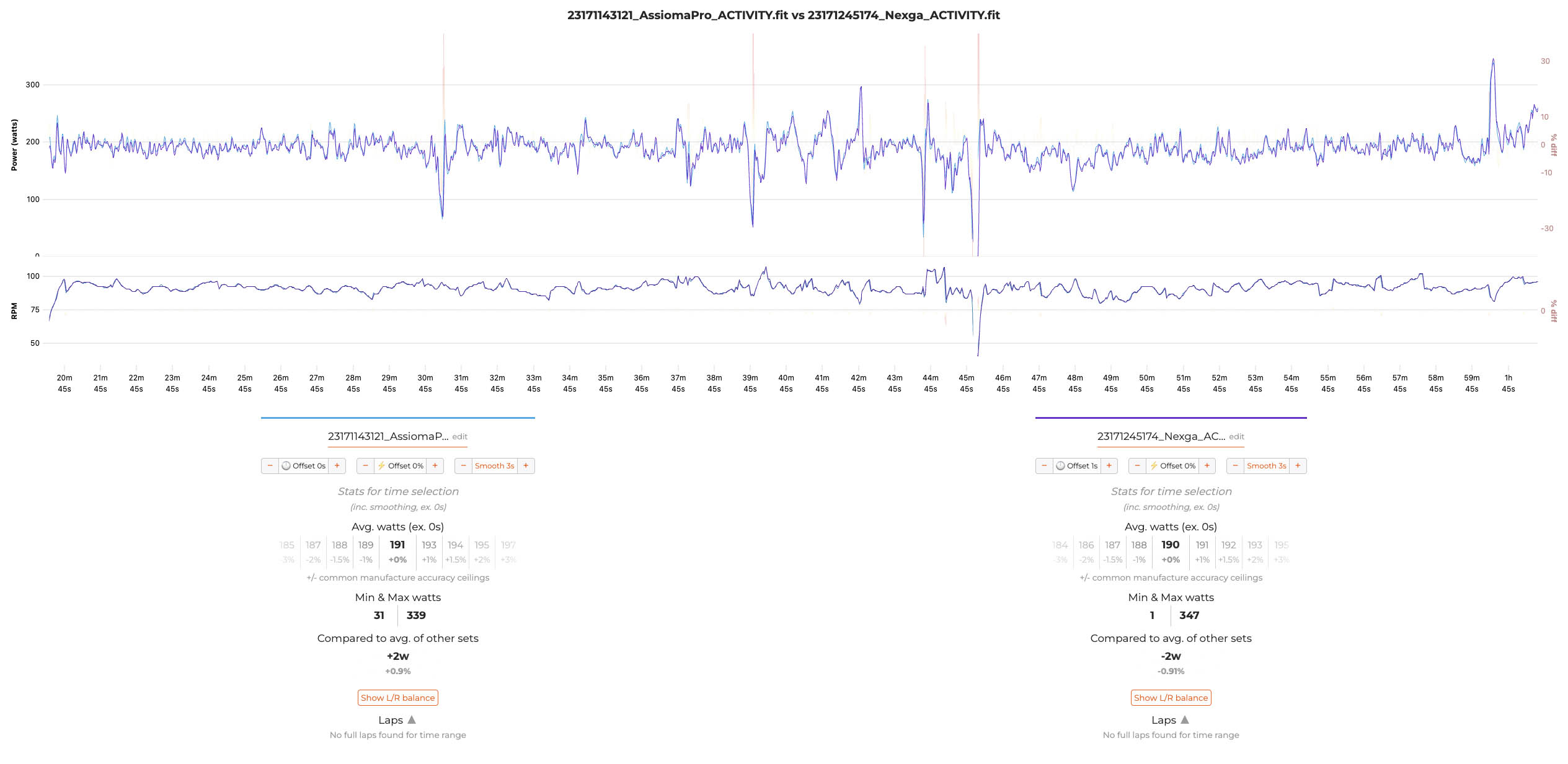
This was from my lunchtime ride today. 40mins @ 190 watts was on the menu. The Nexga reported 190 watts, the Assioma Pro Duos 191. Just 0.9% difference between the two meters.
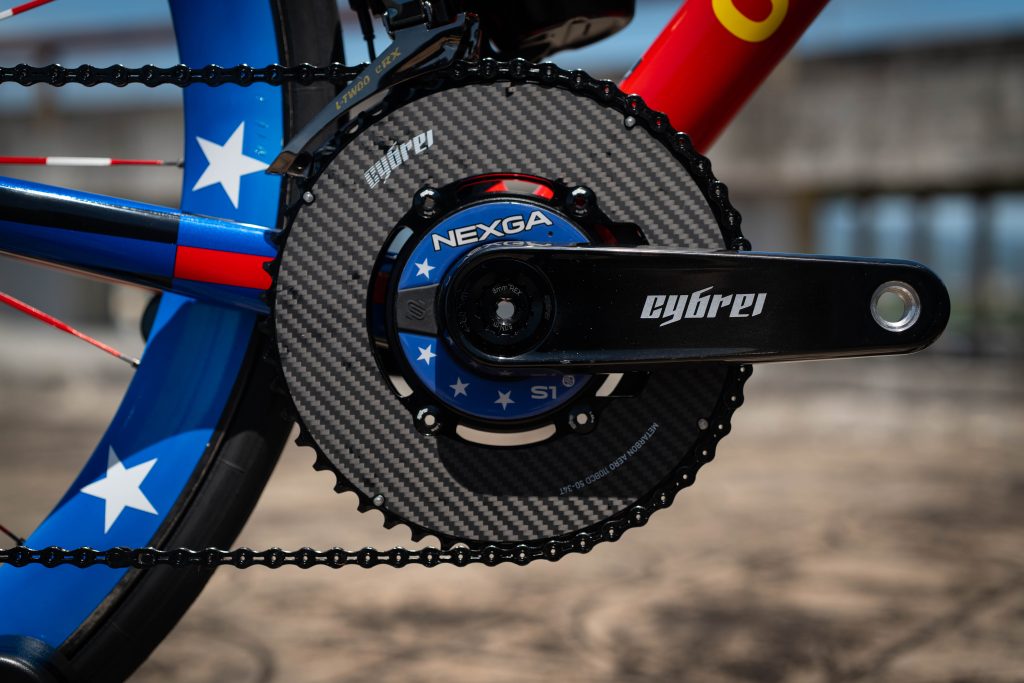
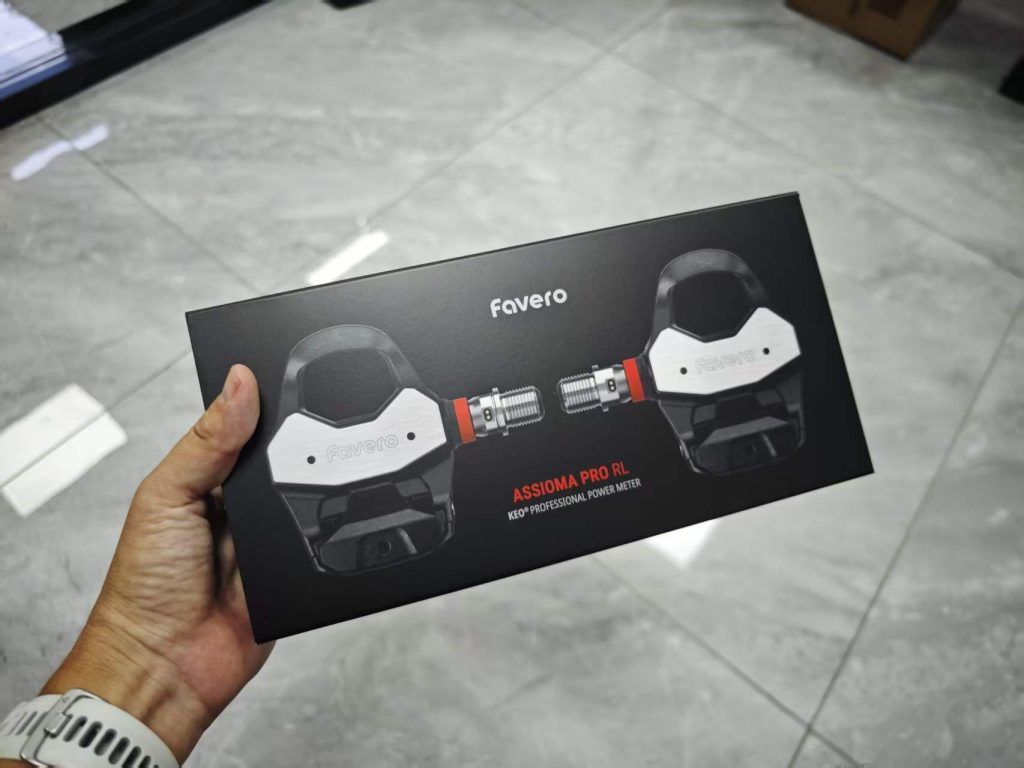
Before I go into the rest of the data (I have lots) Let me give you a quick overview of the testing setup. As I mentioned in the intro, I’ve tested multiple units over the past year, but all the data included in this article is from the latest hardware with the latest firmware (as of June 2026.) The test mule was my Cannondale CAAD 14 with a Nexga S1 (Easton Cinch version) attached to a 155mm Cybrei DUB carbon cranks.
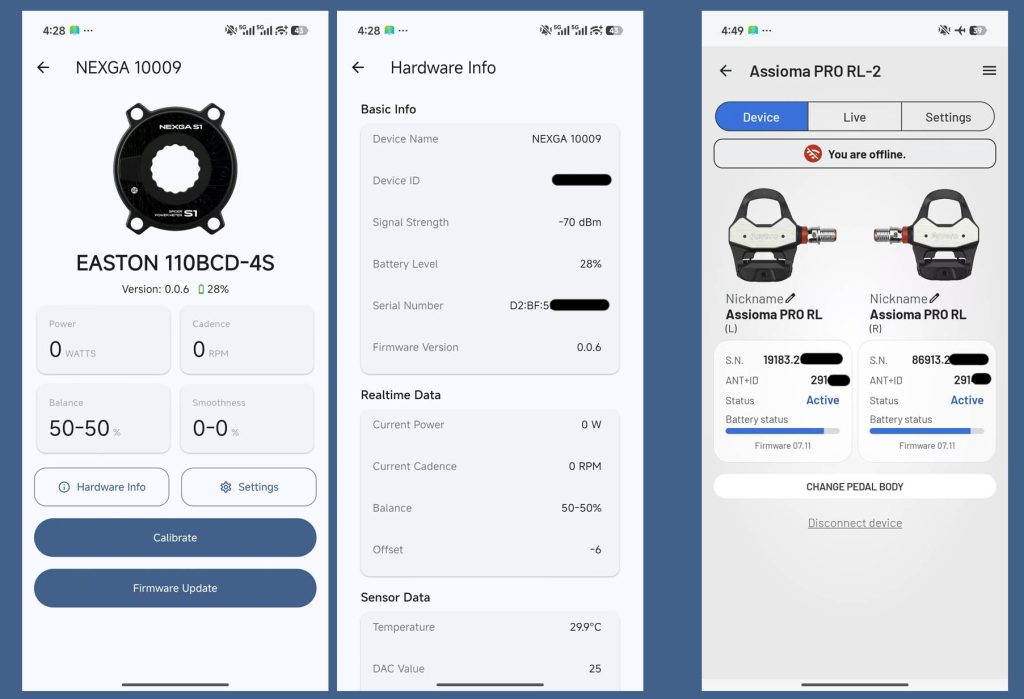
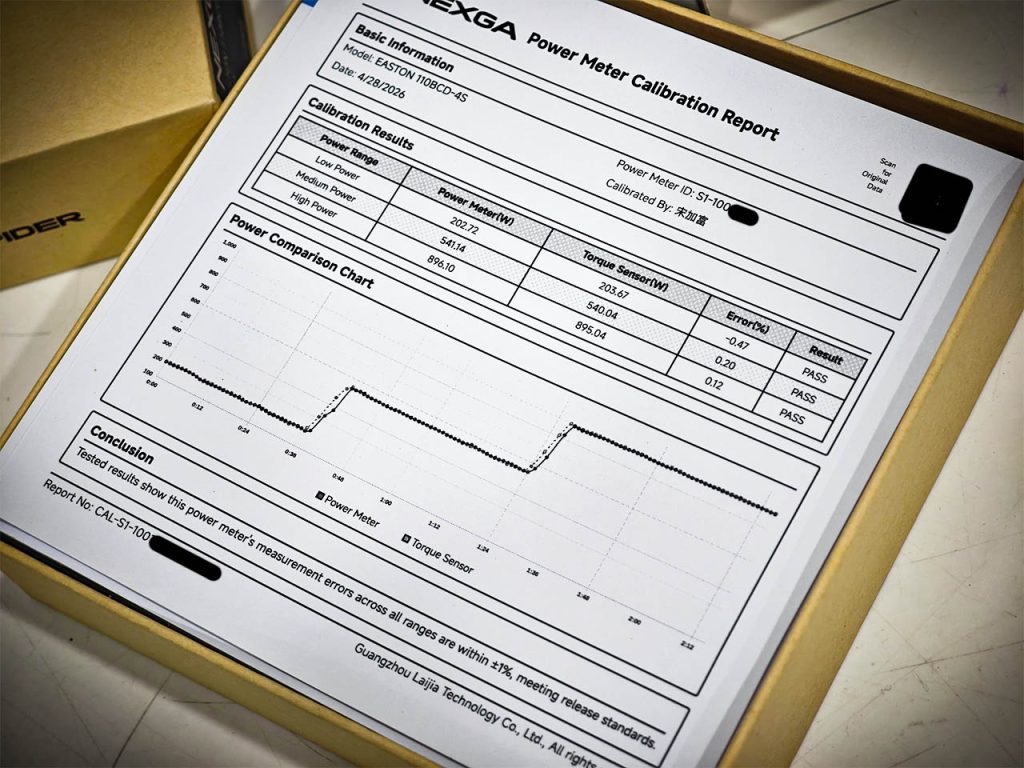
The first thing you see when you open the S1 is the power meter calibration report. Every single power meter is put through a calibration run before leaving the factory. Only if it passes this calibration run (Being within 1%) is it able to leave the factory.
Lets take a closer look at some of the test data. (In no particular order)
Test One
The data from the intro tested at lunch today. 40 minutes at 190watts, fairly steady-state so the easiest situation for the power meter. The max power from each (339 vs 347) is also within 1%.
Test Two
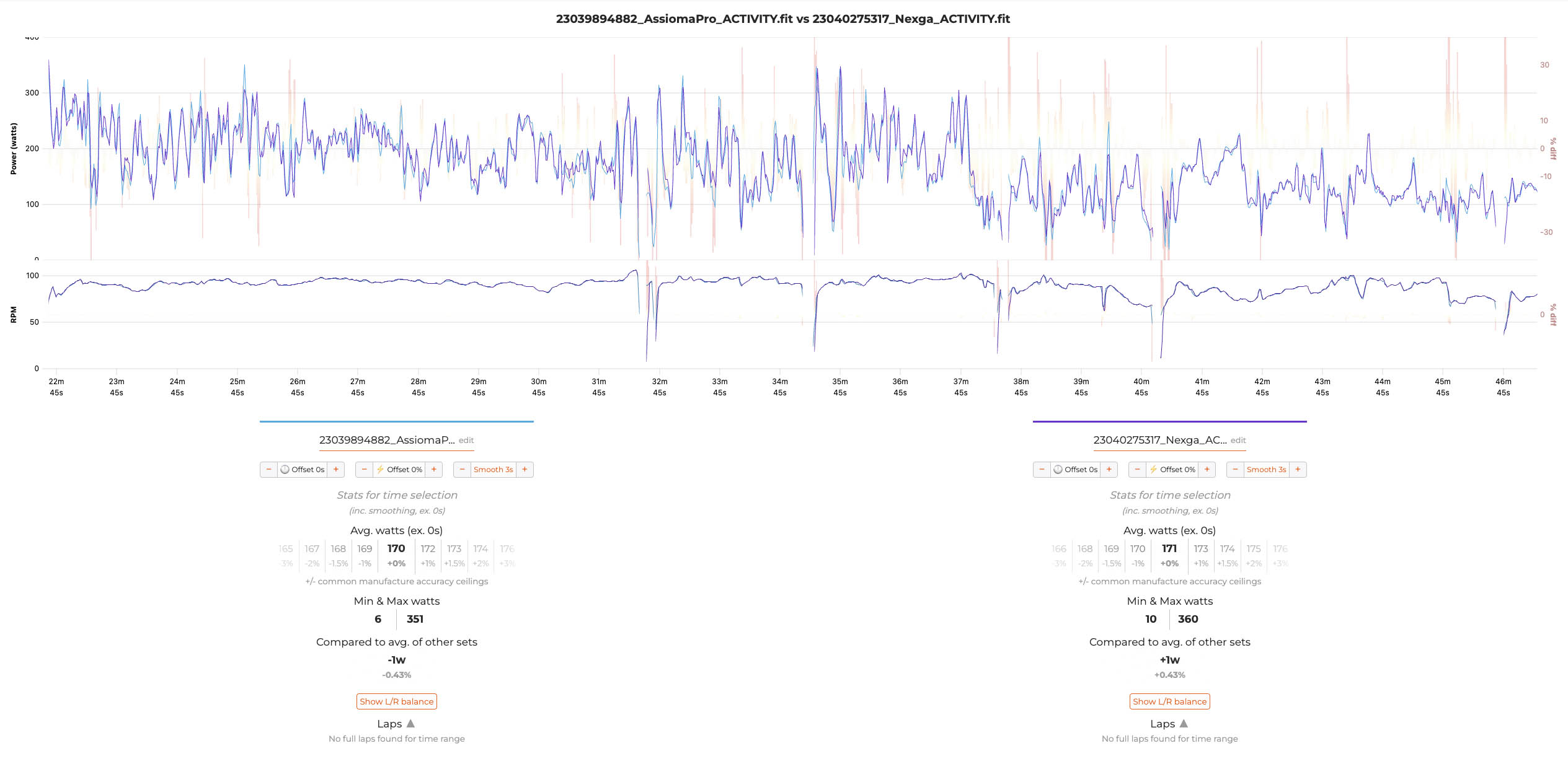
This test was actively testing the power meter, trying to find its strengths and weaknesses. During 20 minutes of normal cycling, everything looks good. The NEXGA S1 and the Assioma Pros are within 0.5% of each other.
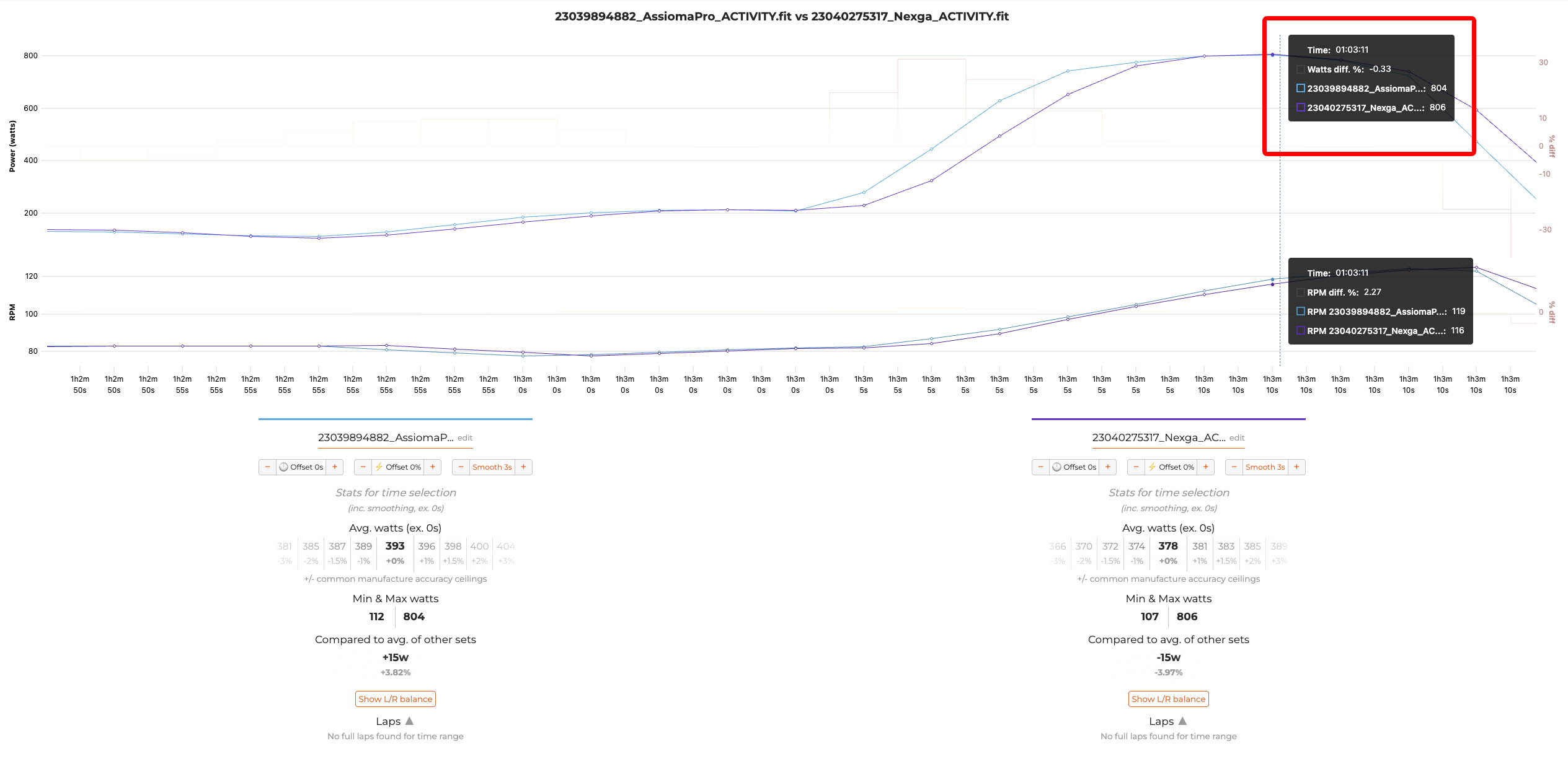
Moving onto some sprints. (Or at least what I call a sprint…) You can see the Assioma is 1 second faster to react (Or it could just be the sync of the two files) but the peak power of the two sprints are almost identical. 804 Vs. 806 watts. To be within just 0.3% of each other during a sprint is very impressive.
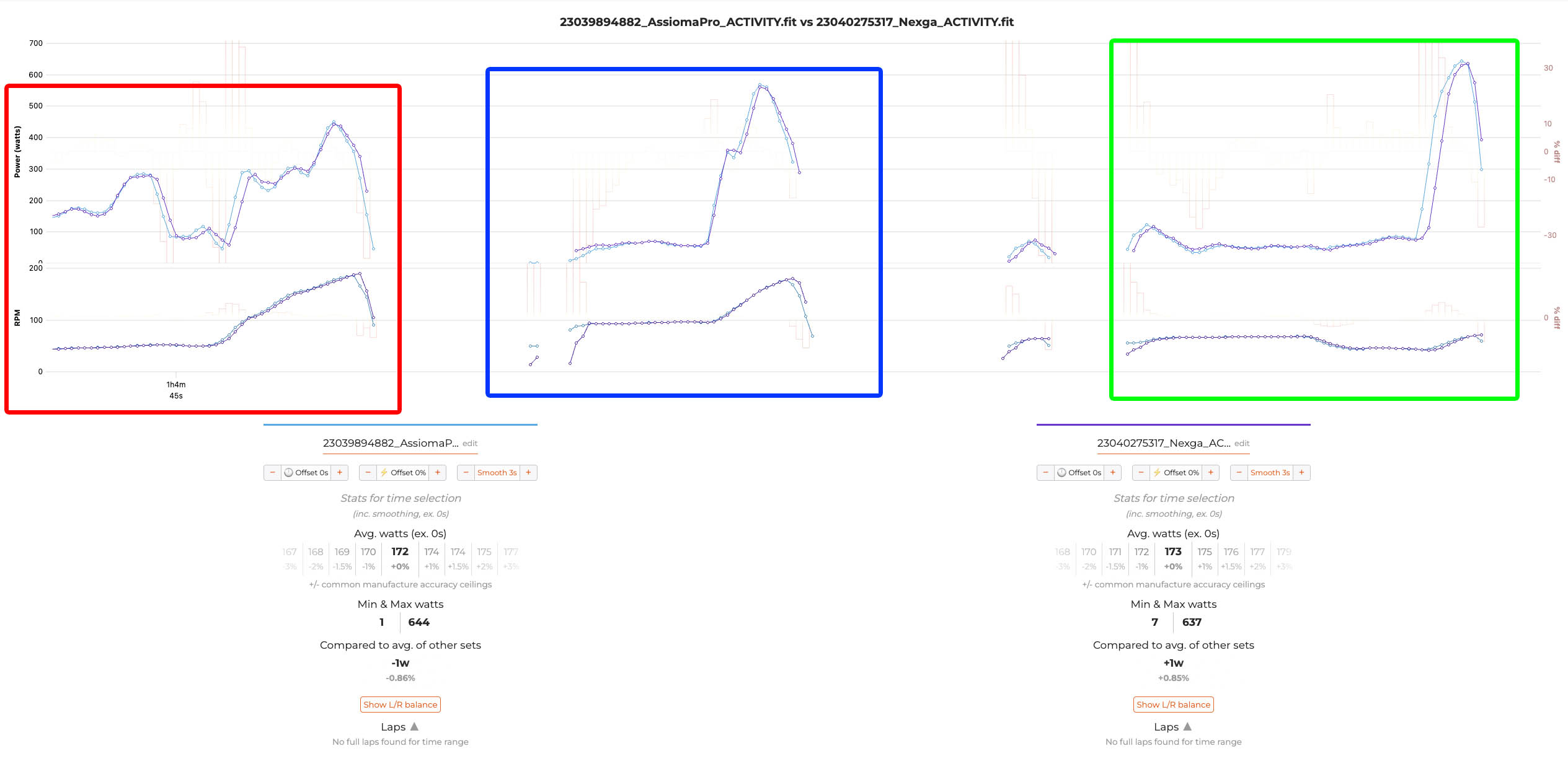
A few more sprints of super high and super low cadences. It’s hard to generate massive power at 200rpm or as low as 50rpm, so these sprints are only around the 400-600 watt range. The first one (in red) hit a max cadence of 190rpm. Again, the time sync seems out by 1 second, but the two meters tell an almost identical story. The second attempt (in blue) also saw very high rpm (~180rpm) but both tell a similar story. Very impressive considering this RPM is way above what a reasonable rider would use. Finally the sprint in green this was ~40rpm, so again, way below what anyone would actually sprint at. The same story here too, apart from a 1 second time difference, the two lines are virtually identical.
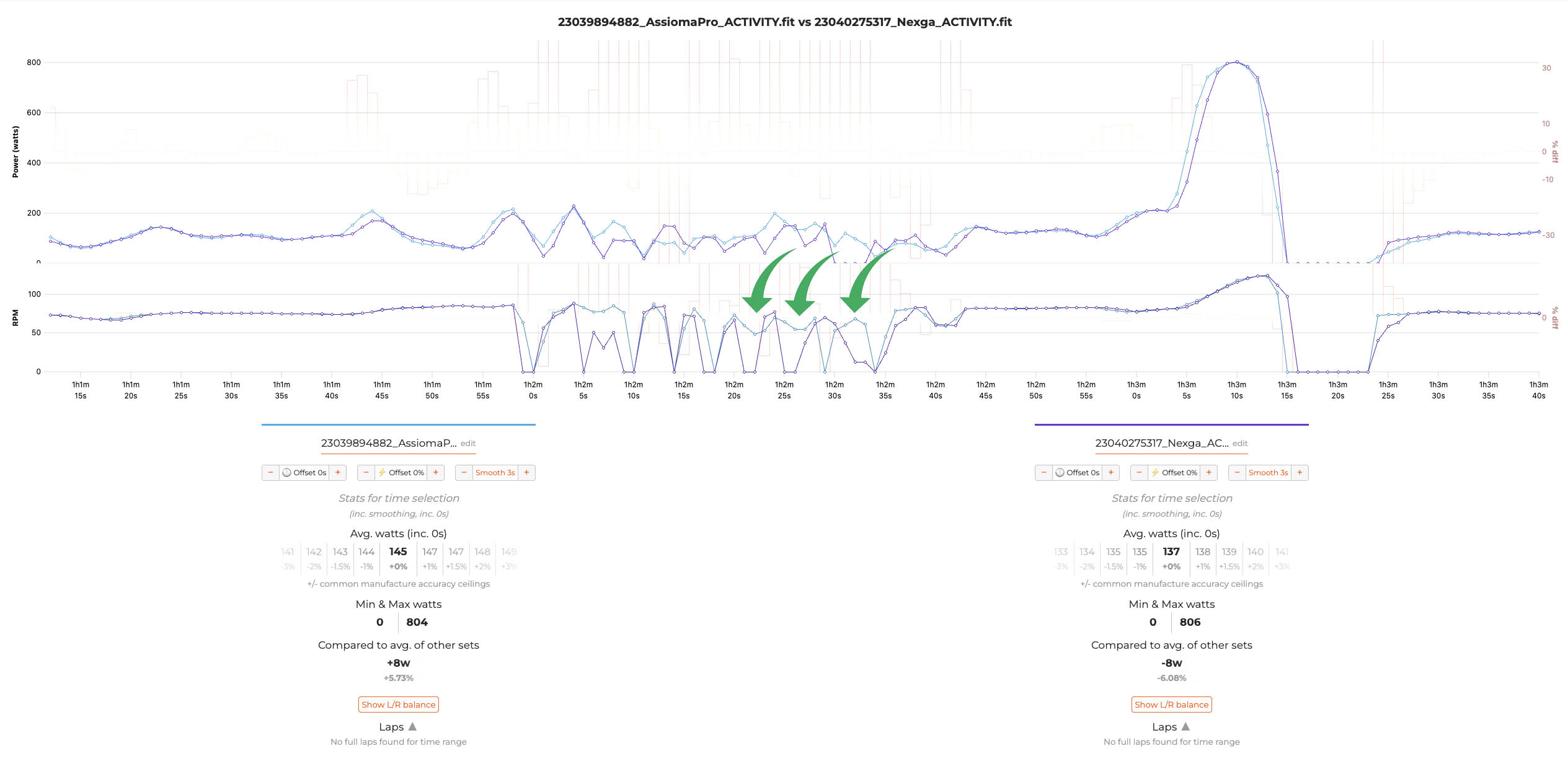
A slight rabbit hole here. Blue is Assioma, Purple is Nexga. For this section I was pedalling for 2 seconds, then stop pedalling for 2 seconds, resume pedalling for 2 seconds, then stop again for 2 seconds. The transitions between pedalling and not pedalling were very abrupt. In this section, I actually believe the NEXGA out-performed the Assiomas. You can see multiple instances where the Assiomas didn’t report 0 RPM whereas the NEXGA did. In this sense, the NEXGA is categorically more accurate than the Assiomas, as it reported the pauses in pedalling more consistently. Looking at the corresponding power for this section, there’s also some disagreement. Hard to say which is correct, but in this situation it’s difficult to get accurate data (Partly due to all this stuff running at 1Hz.) However, it just goes to show that even the “gold standard” of the Assiomas is not perfect. Interestingly, in the sprint after this section (seen to the right) the two meters are once again in perfect agreement.
Test Three
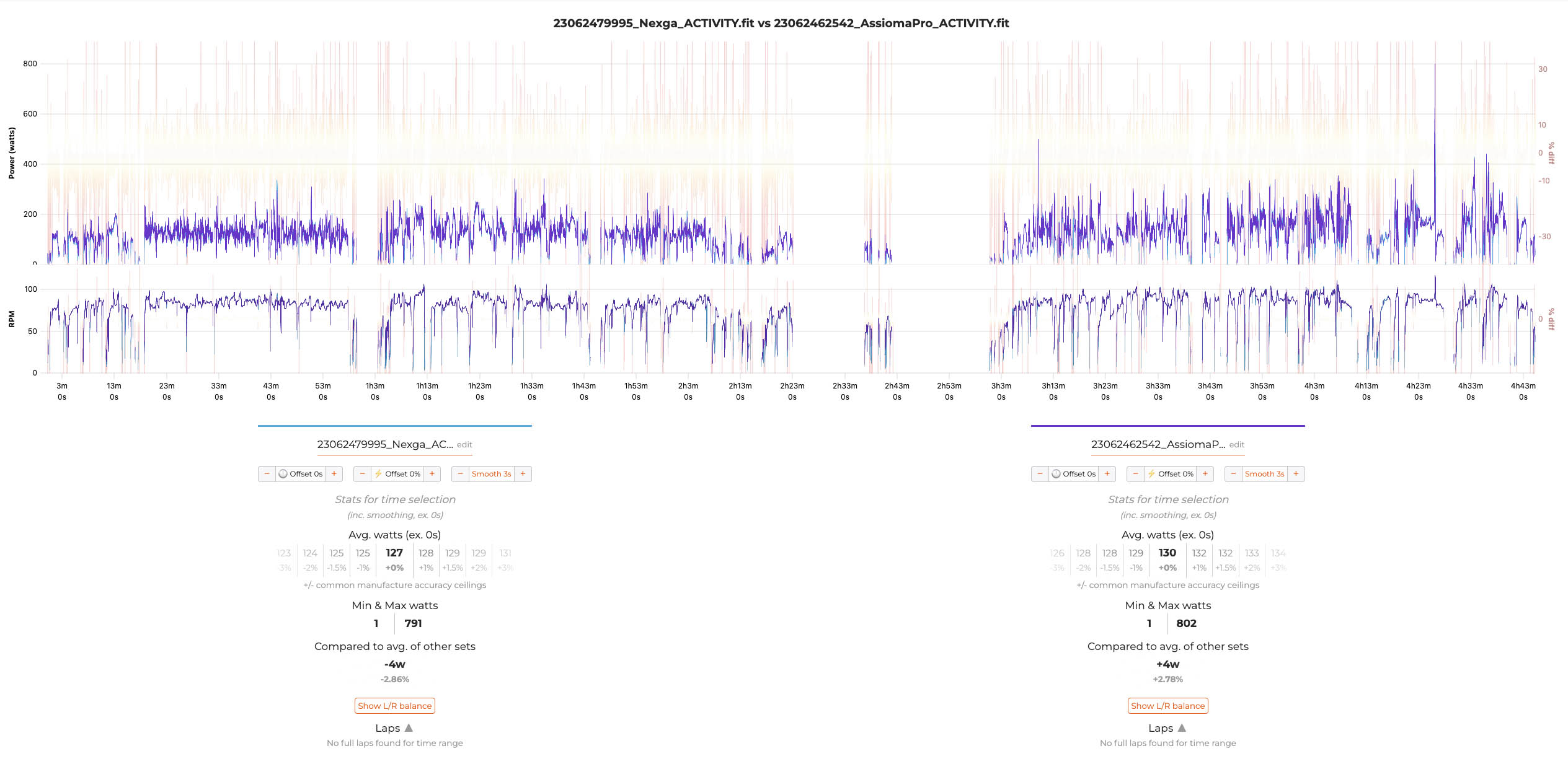
This test is a much longer ride (4hrs) and with a lot more variation in temperature. The ride started at 28 degrees Celsius and had a max temperature of 40 degrees Celsius. I only performed one manual calibration (zero offset) of the two power meters around 15 minutes into the ride. Despite this (and the erratic stop/start nature of the ride) the two power meters finished the ride with only 3 watts of difference (130 vs 127) or around 2.5%. The max power of the two meters were reported as 791 and and 802 watts; around 1.5% difference.
Test Four
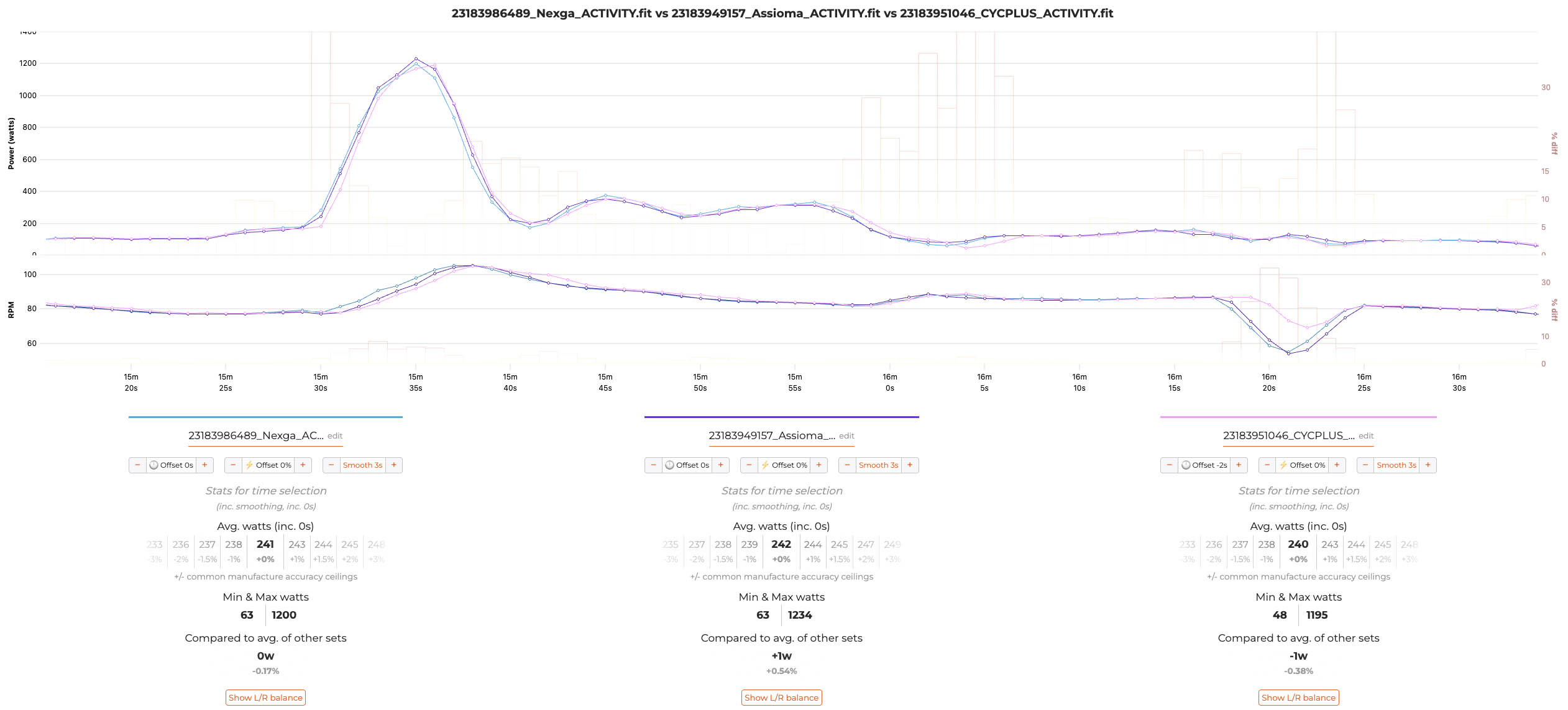
A valid argument of my testing is that I told have the watts in my sprint to really test these meters. Shane Miller (GP Lama) notices ‘drift’ in the power data after high power (>1000w) sprints. Luckily Panda Podium’s resident gorilla James was on hand to do some testing. For good measure we did the testing indoors to get a third data sample with the Cycplus T3. I’ve previously tested the T3 to play nice with the Assiomas, so I imagined it would be a good test.
As you can see from the data above, I was right. In the above chart you see all 3 power meters before the sprint reading identical, and then continuing to do so after the sprint. If you look at the average powers for this ~minute of riding (including the sprint) we have 240, 241 and 242 watts. Almost perfect. 3 power meters all within 1 percent of each other. If you look at the max power, it’s a similar story. 1195, 1200 and 1234. About a 3% difference. The main reason for this, is that during a sprint you only have peak power for that one moment, and all three power meters have different “start” and “stops” to each of their “seconds” of time. If power meter tech worked at 10hz, we probably wouldn’t have this issue. Regardless, 3% of accuracy during a violent sprint is impressive.
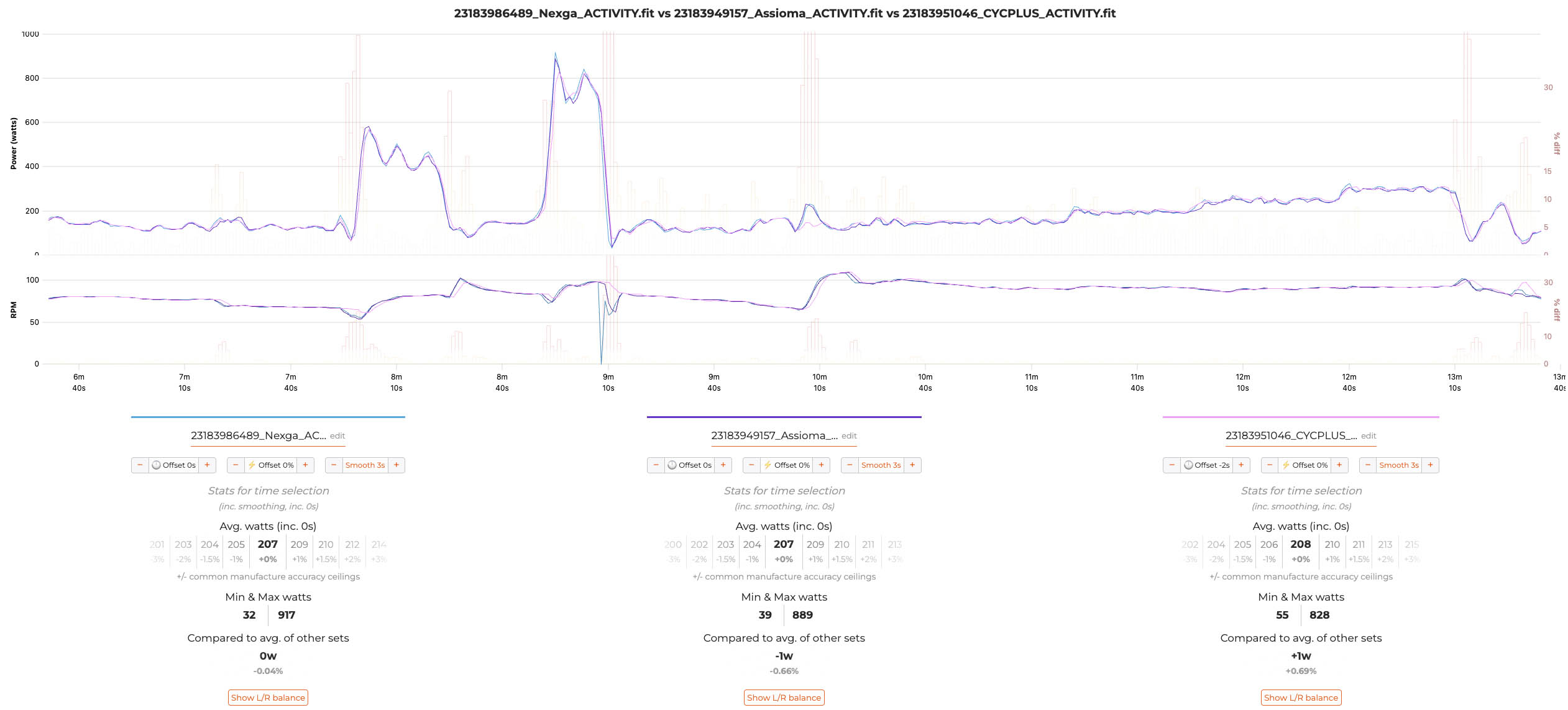
Zooming out to a ~6min section with random riding and power surges, the data continues to impress. Average powers: 207, 207 and 208 watts.
Conclusion
In conclusion, the NEXGA seems to have finally entered the realm of “Good.” Or maybe even “Great.” USB-C charging is a great feature that means one less cable to forget when you go travelling, the weight is impressive and the power numbers seem to be the most accurate I’ve seen from any spider based power meter. The price is competitive (especially when compared to Western power meters of similar levels of accuracy.) The NEXGA seems to be the perfect partner to any of the growing number of EASTON Cinch compatible crank arms that are on the market. (It’s also available for SRAM, ROTOR Aldhu, or Shimano MTB cranks.)
Convinced? Check out the NEXGA S1 here.
Author
Founder and CEO of Panda Podium. British expat living in China for 15 years. Love anything with wheels that goes fast. Mainly riding road bikes. Enjoy a good gravel ride too, but slow down to 10kph at the mere sign of loose sand. Still have huge love for rim brakes and alloy frames...
Leave a Reply Cancel reply
You must be logged in to post a comment.
Comments (2)
Looks promising, how about left/right balance?
It was within a few % of the Assiomas, but, the Assiomas are always gonna be more accurate because they physically have two sensors.